
EMDR therapy
- Home
- EMDR therapy
EMDR therapy is a therapeutic approach supported by scientific evidence to treat trauma, anxiety, phobias, emotional blockages, and difficult experiences that continue to affect your life.
Through bilateral stimulation, the brain processes memories that were stuck, reducing its emotional load and allowing you to regain balance, clarity, and inner calm.
- Psychological trauma and post-traumatic stress.
- Anxiety and stress.
- Defeats and losses.
- Relational wounds.
- Low self-esteem.
- Emotional blockages and repetitive patterns.
How do we work in a session?

We identify the experiences that still affect your present and set therapeutic goals.

I accompany you with clear tools and a safe space. You learn resources to regulate emotions, better manage your thoughts, calm anxiety, and strengthen your inner security.
We work with your story to get to the root of the problem with respect and without pressuring the pace.

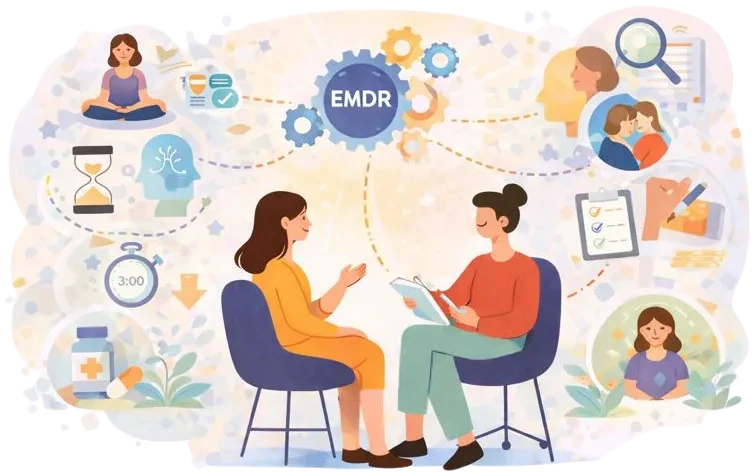
We work in an integrative way, combining EMDR with other approaches, to address your difficulties in a respectful and tailored way.

Frequently asked questions
Basic information about the organization of the sessions, conditions and modality of the online consultation.
Yes. Many people start their therapeutic process directly online and find it a comfortable, accessible, and less intimidating experience..
If you feel that past experiences continue to affect your current well-being, EMDR can help. In the first session, we assess together whether this approach suits your needs and work in an integrative way to support you in achieving your therapeutic goals.
Because some experiences are not processed completely and are stored in the nervous system as if they were still happening. EMDR helps those memories to integrate properly so that they stop being activated in the present.
Yes. It is not necessary to remember everything in detail. EMDR works with sensations, emotions, and images, even when the memory is vague or fragmented.
Bilateral stimulation facilitates the brain’s adaptive processing of information, similar to what occurs during REM sleep. This allows for the emotional load of the memory to be reduced and for new, healthier associations to be generated.
It is a very common concern. Before working with difficult memories, sessions are dedicated to creating safety, resources, and stability. You have control of the pace at all times.